
 Nederlands
€475,00


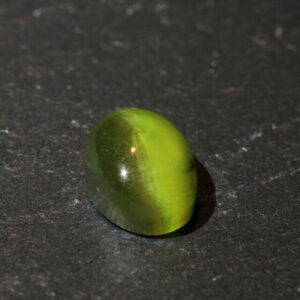
Demantoid garnet
€3.475,00
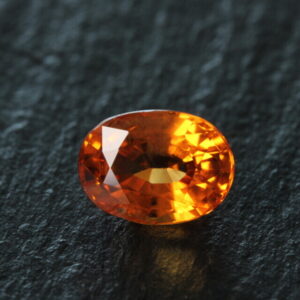
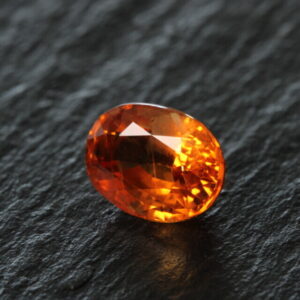
Garnet
€685,00


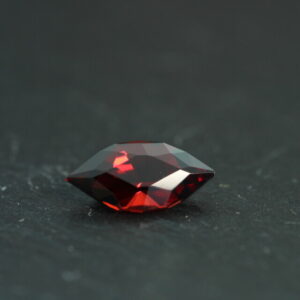
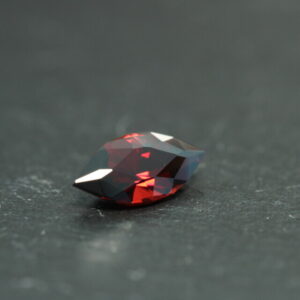
Almandine garnet
€110,00

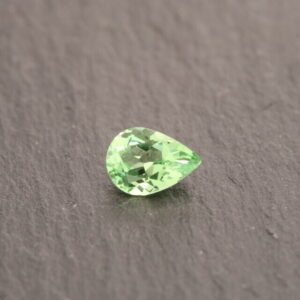
€235,00
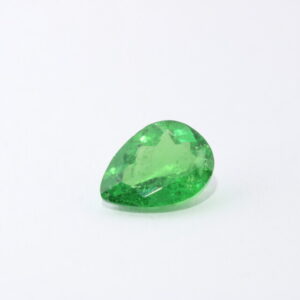

Garnet
€649,00
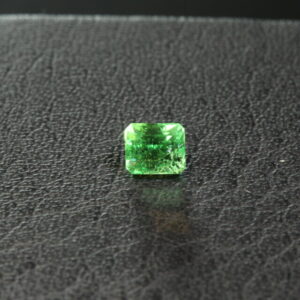
Out of stock
€297,00
Demantoid garnet
€556,00
Spessartine garnet
€99,00
More about garnets
Garnet characteristics & sources
The garnet family is quite large, and most people are familiar with the "common" red garnets that fit into less expensive jewellery. However, much like the wide variety of colours found in tourmaline, enthusiasts can choose from a rich palette of garnet colours: green, orange, pinkish-orange, deeply saturated purplish-red shades, and even some blue. The number of garnet species and varieties is intimidating:
- almandine garnet
- pyrope garnet
- andradite garnet
- grossular garnet
- uvarovite garnet
- mixtures of the above
Garnet types & value
Some varieties of garnets can reach market values comparable to fine emeralds (thousands of dollars per carat), but in flawless quality and larger sizes.
- Tsavorite garnet: tsavorite is a grossular variety discovered in the 1960s and is currently the most important green garnet. Top quality is vividly green, coloured by the trace element vanadium. Sources are primarily found in East Africa. Small sizes are used for mid-range jewellery. Large sizes are very rare and therefore very expensive.
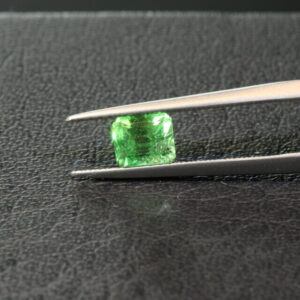
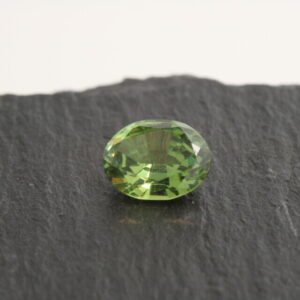
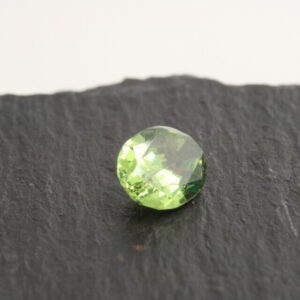
- Demantoid garnet: yellowish-green to green demantoid ("sparkles like a diamond": the dispersion of demantoid garnet is higher than that of diamond), a variety of andradite, has been known for more than a century. It was first found in the Russian Ural Mountains and was highly prized by the Russian nobility. Today, there are also finds in countries like Iran and Namibia. Top-quality demantoid garnet shows "horsetail inclusions" of asbestos fibres. Demantoid garnet sizes above 3 carats are extremely rare.
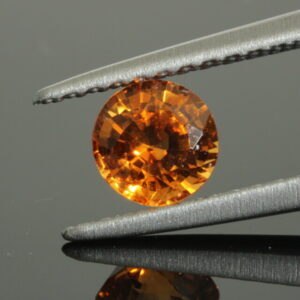
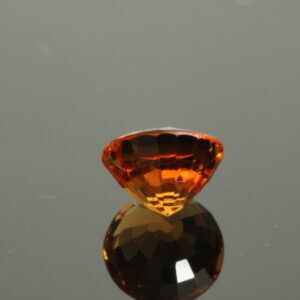
- Spessartine garnet: spessartine has long been a collector's stone, but is now more widely available in calibrated sizes with good colour. The colour is derived from a combination of manganese and trace amounts of iron. Today, it is the most popular orange garnet.
Garnet treatments
Garnets are rarely treated. A certificate from a gemstone laboratory is advisable for expensive garnets: it states the garnet variety and can provide information regarding (any) treatments.
Garnet care
The hardness of a gemstone is the degree to which it is subject to scratching. Most dust in the atmosphere is quartz, which has a hardness of 7. Gemstones with a hardness below 7 on the Mohs scale will experience wear during wearing and cleaning.
Demantoid garnet has a hardness between 6.5 and 7. It is most suitable for items such as brooches, earrings, and pendants, where they are not heavily exposed to damaging situations. When mounted in rings, these stones require care during wear. Tsavorite, spessartine, and red garnets have a hardness between 7 and 7.5 and are good ring stones. Cleaning is best done using warm water, a mild, detergent-free soap, and a soft toothbrush.