

 Nederlands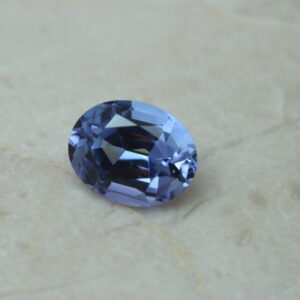
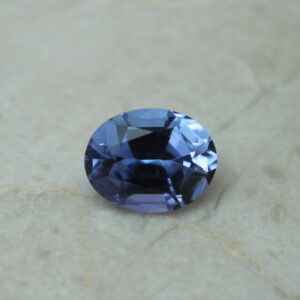
Out of stock
In-house cut
€417,50


Out of stock
Tanzanite
€615,00
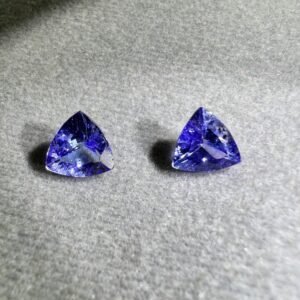
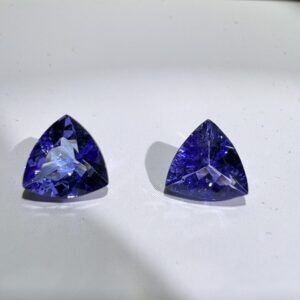
Out of stock
€150,00
Tanzanite
What is tanzanite?
Tanzanite is a rare and strikingly colored gemstone belonging to the zoisite mineral group (Ca₂Al₃(SiO₄)₃(OH)). It is renowned for its intense blue-violet to violet-blue color and its strong pleochroism—the ability to display different colors from different viewing angles, including blue, violet, and sometimes brown or yellowish green.Tanzanite has a hardness of 6 to 7 on the Mohs scale. Although it is relatively hard, it is more susceptible to scratches and fractures than gemstones such as sapphire, requiring careful handling and wear.
Categories of tanzanite
Tanzanite is not divided into strict varieties like many other gemstones, but it is commonly classified according to color, clarity, treatment, and cut:
- Blue-violet tanzanite - the most desirable color variety. The finest gemstones display a rich, saturated color with a harmonious balance of blue and violet.
- Light blue or lavender tanzanite - less intensely colored, often originating from smaller crystals or material that has undergone less heating. An attractive and more affordable option.
- Unheated tanzanite (natural color) - typically exhibits yellowish-green or brownish-yellow tones. Less popular in the jewelry market but highly prized by collectors due to its rarity.
- Fancy-cut or cabochon tanzanite - occasionally used in unique jewelry designs or for gemstones containing inclusions.
Origin of tanzanite
Tanzanite is found in only one location in the world: the Merelani Hills at the foothills of Mount Kilimanjaro in northern Tanzania, near the city of Arusha.This exclusive origin makes tanzanite unique among gemstones. The mining area is divided into several sectors (Blocks A, B, C, and D), each operated by different mining companies. Because of its extremely limited geographic source, tanzanite is often described as being "1,000 times rarer than diamond."
Tanzanite treatments
Nearly all commercially available tanzanite undergoes treatment:
- Heat treatment (very common) - applied to gemstones with brownish or greenish hues to reveal the characteristic blue-violet color. The treatment is permanent and widely accepted throughout the gemstone industry.
- Untreated tanzanite - primarily valued by collectors. Natural colors range from greenish brown and yellowish green to soft blue.
Most sought-after tanzanite
- Deep blue-violet, transparent tanzanite with exceptional clarity - preferably weighing over 5 carats. These gemstones represent the finest quality available.
- Large, exceptional cut gemstones (10+ carats) - highly sought after by collectors and investors.
- Untreated collector-grade tanzanite - rare and difficult to find, especially with excellent clarity and symmetry.
- Tanzanite featured in fine designer jewelry - especially when paired with diamonds or set in exclusive jewelry designs, these gemstones command significantly higher values.