

 Nederlands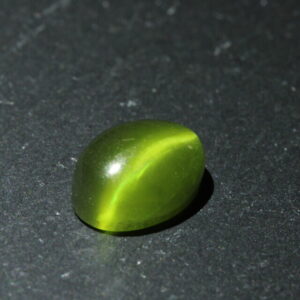
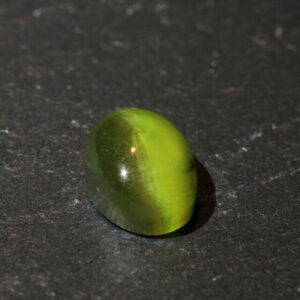
Demantoid garnet
€3.475,00
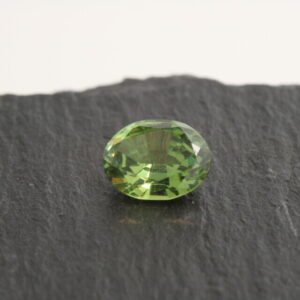
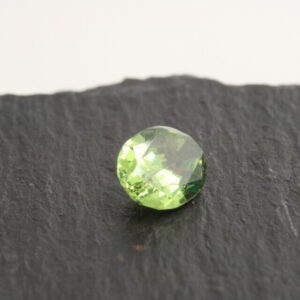
Demantoid garnet
€556,00

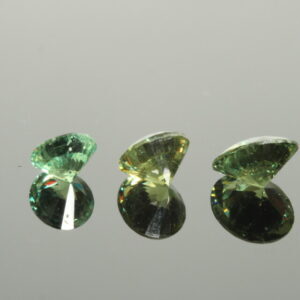
Out of stock
Demantoid garnet
€295,00
Demantoid garnet
What is demantoid garnet?
Demantoid garnet is a rare, green variety of the andradite group within the garnet family. The name "demantoid" comes from the German word Demant, meaning "diamond" – a reference to its exceptional dispersion (fire), which can even exceed that of a diamond.With a hardness of 6.5 to 7 on the Mohs scale, demantoid is reasonably durable, though careful use in rings is advisable. The stone is primarily valued for its vivid green colour, brilliance and rarity.Demantoid garnet is one of the most prestigious members of the garnet family. Its rare green colour, high brilliance and natural origin without standard treatments make it extremely sought after. Russian demantoids with characteristic inclusions are particularly iconic, while clear, large stones from Namibia are becoming increasingly popular. A valuable choice for both jewellery lovers and gemstone collectors.
Demantoid garnet categories
Demantoid garnets vary based on colour, clarity, origin and the presence of specific inclusions:
- Green to emerald green demantoid - the most sought-after colour, often caused by trace amounts of chromium.
- Yellow-green to olive-green demantoid - caused by iron. Less vivid in colour, but often with good clarity and brilliance.
- Russian demantoid with ‘horsetail’ inclusions - highly favoured among collectors. The characteristic fibre structures of chrysotile are considered a feature of origin.
- Afghan and Iranian demantoid - usually light yellow-green, often well-cut, with fewer inclusions.
Origin of demantoid garnet
Demantoid is extremely rare and is found in only a limited number of countries:
- Russia (Ural Mountains) – the classic source since the 19th century. Russian stones are famous for their rich emerald green colour and horsetail inclusions.
- Namibia – a more modern deposit. Stones from Namibia are often larger, very clear and have a more yellow-green shade than their Russian counterparts.
- Madagascar – supplies smaller quantities of high-quality, bright green demantoids.
- Italy, Iran, Afghanistan, Pakistan – secondary sources, sometimes with specific regional characteristics, but generally in smaller quantities.
Demantoid garnet treatments
Demantoid is usually not treated, which makes it extra appealing to lovers of natural gemstones. Nevertheless, a few methods occur sporadically:
- Heat treatment: sometimes applied to improve the colour, usually in lighter or brownish-tinted specimens. This treatment is rare and generally stable.
- Filling with oil or resin: applied in rare cases to mask small fractures. This method is not commonly used and generally lowers the value.
- Synthetic demantoid: exists, but is not widespread in the market. It is primarily used for educational purposes or imitation.
Most sought-after demantoid garnets
- Emerald green Russian demantoid with horsetail inclusions: highly sought after by collectors due to origin, colour and unique inclusions.
- Large, clean stones of >1 carat: because of their rarity, large, well-cut demantoids are exceptionally highly valued.
- Deeply saturated, vividly green specimens without visible inclusions: particularly loved in the jewellery industry.
- Stones with high dispersion and excellent cut: the light reflection is crucial for the visual impact of demantoid.
- Demantoid garnet with chatoyancy effect: extremely rare, especially in larger sizes with a clear cat's eye. Highly sought after by collectors.