

 Nederlands

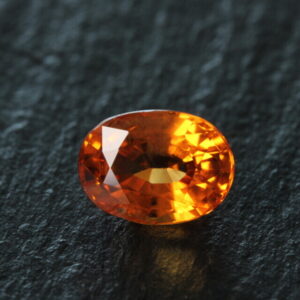
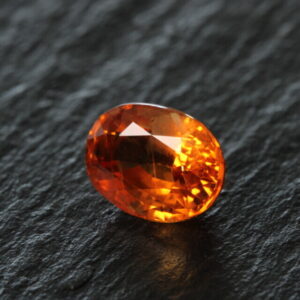
Garnet
€685,00


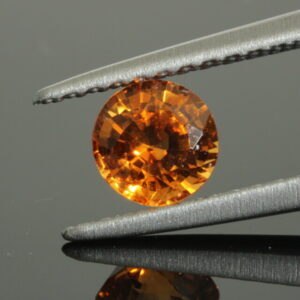
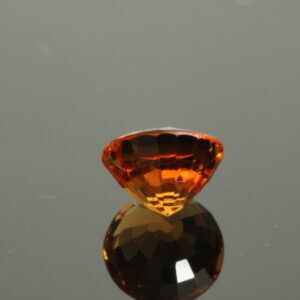
Spessartine garnet
€99,00
Out of stock
€572,00
€495,00
Out of stock
Garnet
€196,00
Out of stock
€316,00
Spessartine Garnet
What is spessartine garnet?
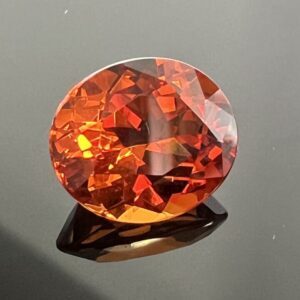
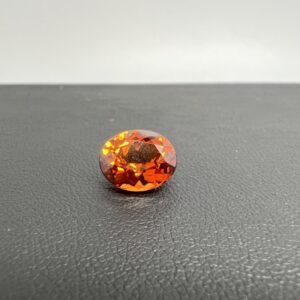
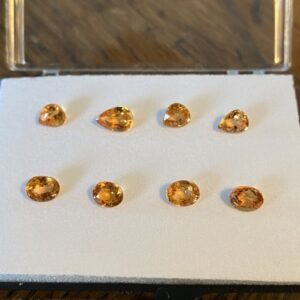
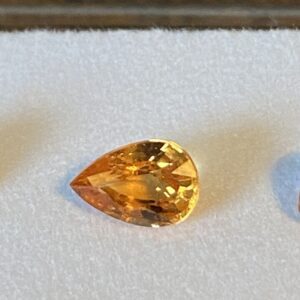
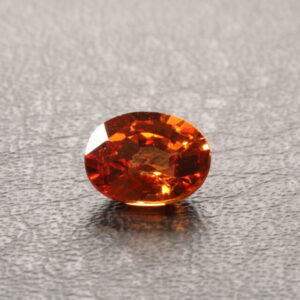
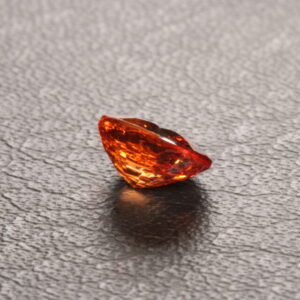
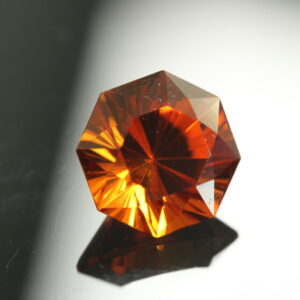
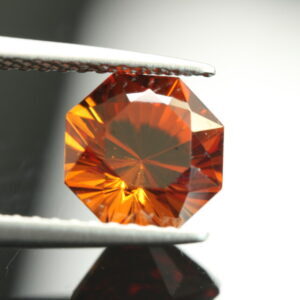
Spessartine garnet (also known as spessartite) is an orange to reddish-brown gemstone belonging to the garnet group of minerals. Its name is derived from the Spessart Mountains in Germany, where the mineral was first discovered. Chemically, spessartine is a manganese aluminum silicate (Mn₃Al₂(SiO₄)₃), and its vibrant color is caused by the presence of manganese.Spessartine has a hardness of 7 to 7.5 on the Mohs scale, making it suitable for everyday wear in jewelry. Thanks to its high refractive index, the gemstone displays brilliant sparkle and vivid fiery colors, ranging from yellowish orange to deep reddish orange.Spessartine garnet is a remarkably colorful gemstone with natural brilliance and exceptional purity. Its combination of vivid color, excellent durability, and typically untreated nature has made it increasingly popular among both jewelers and gemstone collectors.
Spessartine garnet varieties
Spessartine occurs in several color varieties, which are commonly classified by color intensity, origin, and composition:
- Orange spessartine - a pure, warm orange color, often associated with gemstones from Nigeria or Mozambique.
- Mandarin garnet - bright orange, often appearing almost fluorescent - Originates from Namibia. Highly sought after for its vivid color and relative rarity.
- Red-orange spessartine - more intense, darker shades that can resemble fire opal or hessonite garnet.
- Spessartine-almandine blends - when spessartine mixes with almandine (an iron-rich garnet), it produces a darker brownish-red color. Less sought after but attractively priced.
- Transparent versus slightly included spessartine - transparent, eye-clean gemstones are significantly rarer and more valuable than stones with noticeable inclusions or cloudiness.
Origin of spessartine garnet
Spessartine is found worldwide, but the most desirable and highest-quality gemstones originate from a few key regions:
- Namibia – Famous for top-quality Mandarin garnets with a vivid, pure orange color.
- Nigeria – A major producer of orange to reddish spessartine with excellent clarity.
- Mozambique – An important source of both bright and deeply colored spessartine.
- Tanzania – Produces gemstones with distinctive orange to brownish-red hues.
- Myanmar, Sri Lanka, and the United States (Virginia) – Historical or smaller-scale sources.
Spessartine garnet treatments
Spessartine is generally untreated, making it especially appealing to collectors and gemstone purists. A few important points:
- No common heat treatment – The color of natural spessartine is naturally stable and typically requires no enhancement.
- No chemical treatments or coatings – Spessartine is rarely enhanced or impregnated.
- Synthetic varieties – Very rare. When produced, they are mainly intended for educational or industrial purposes.
Most sought-after spessartine garnets
- Mandarin garnets from Namibia: vivid orange, virtually inclusion-free. Rare and highly valuable.
- Transparent, eye-clean orange spessartine from Nigeria or Mozambique: especially prized when displaying vivid color and excellent cutting.
- Large gemstones (5+ carats) with even color: large, well-cut specimens are exceptionally rare.
- Spessartine with exceptional fire and brilliance: thanks to its high refractive index, some gemstones display outstanding optical performance, making them especially desirable.