
 Nederlands
€1.350,00

Out of stock
€5.200,00

Out of stock
€180,00

Out of stock
€695,00
More Information About Opal
What is opal?
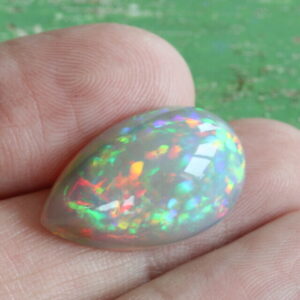
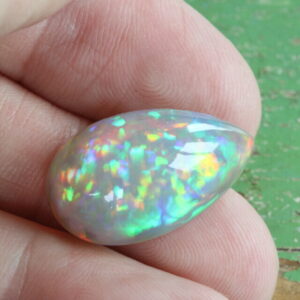
Opal is a non-crystalline (amorphous) gemstone composed of microscopic spheres of hydrated silicon dioxide. Its unique structure creates a spectacular optical phenomenon known as opalescence, or play-of-color—a display of rainbow-like flashes that appear as light moves through the gemstone. Unlike most gemstones, opal is not crystalline, meaning it does not have a fixed crystal structure.Opal contains between 3% and 21% water, typically around 6–10%. This makes the gemstone sensitive to dehydration, cracking, or color changes under certain conditions.
Types of opal
Opal occurs in several varieties. These are generally divided into precious opal and common opal, based on the presence of play-of-color:
- Precious opal – displays the characteristic play-of-color. This category includes several subtypes:
- White opal – a light body color with vibrant flashes of color.
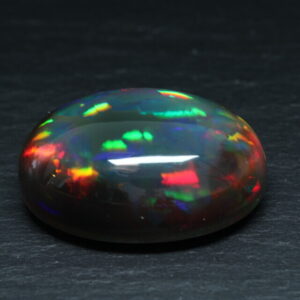
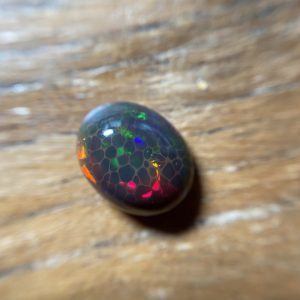
- Black opal – a dark body color that provides exceptional contrast, making the play-of-color especially vivid.
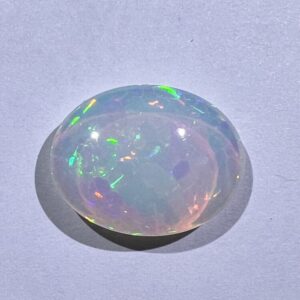
- Crystal opal – transparent to semi-transparent opal with intense play-of-color.
- Boulder opal – naturally attached to its host rock, with visible play-of-color.
- Matrix opal – play-of-color is dispersed throughout the surrounding host rock.
- Common opal – does not display play-of-color and occurs in solid colors such as white, pink, blue, green, or gray. Also known as "potch."
- Fire opal – bright orange to red opal, most commonly from Mexico. May or may not display play-of-color.
Origin of opal
Opal is found worldwide, but several regions are renowned for producing exceptional material:
- Australia – by far the world's leading source of precious opal, with famous mining areas including Lightning Ridge (black opal), Coober Pedy (white opal), and Andamooka.
- Ethiopia – known for crystal and hydrophane opals with vivid play-of-color, many of which are treated. Untreated black opals from Ethiopia are among the rarest opals in the world.
- Mexico – famous for its fire opals, which are often transparent to translucent.
- Brazil, Honduras, and the United States (Nevada) – smaller but important sources of various opal types.
Opal treatments
Various treatments are sometimes applied to improve the appearance or durability of opal:
- Oil, resin, or wax impregnation – enhances appearance and stabilizes cracks, particularly in porous opals.
- Sugar or smoke treatment – used primarily on Ethiopian opals to create an artificially dark body color that enhances the play-of-color.
- Doublets and triplets – composite gemstones consisting of a thin layer of opal backed by another material and sometimes covered with a transparent cap (such as quartz or glass).
Most sought-after opals
The value of opal is determined by its play-of-color, body color, brightness, transparency, size, and rarity. The most sought-after varieties include:
- Black opal from Lightning Ridge (Australia) – extremely rare and prized for its deep contrast and vibrant colors.
- Untreated black opal from Ethiopia – exceptionally rare and highly sought after by collectors.
- Crystal opal with vivid play-of-color – especially from Ethiopia and Australia.
- Boulder opal with striking patterns – particularly specimens displaying broad areas of color, known as the "harlequin pattern."
- Fire opal from Mexico – bright, richly saturated orange or red gemstones, with or without play-of-color.